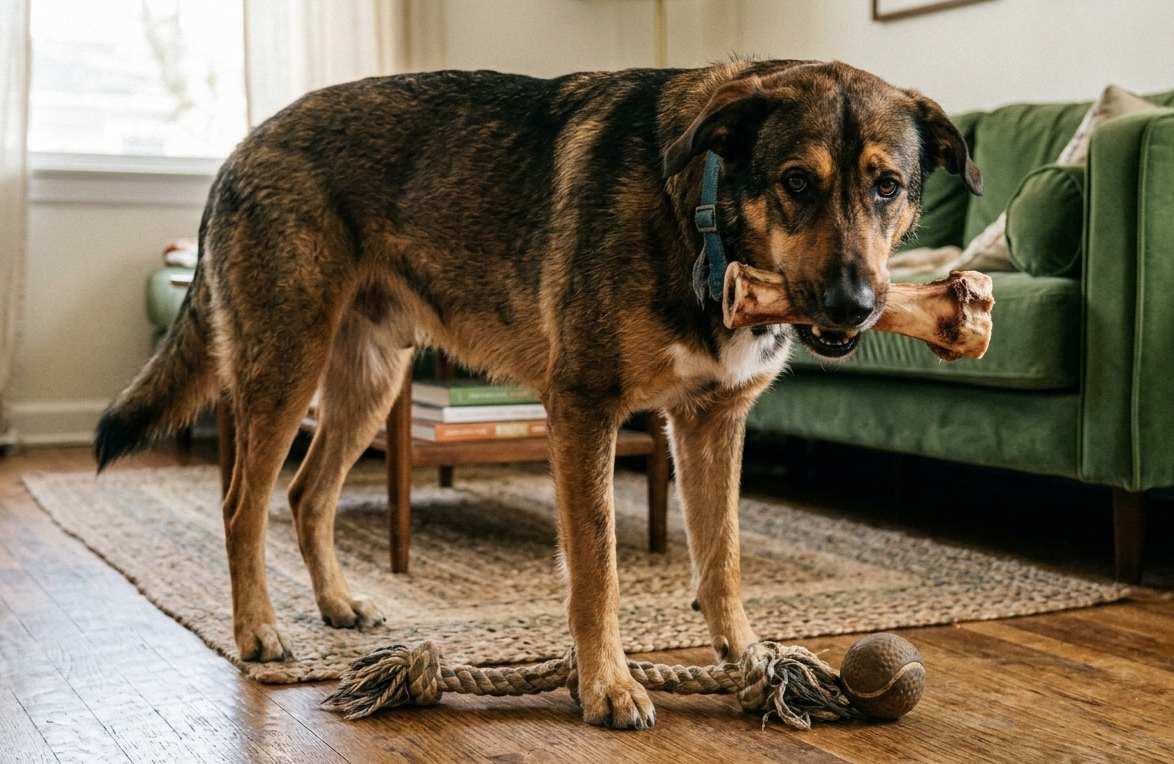
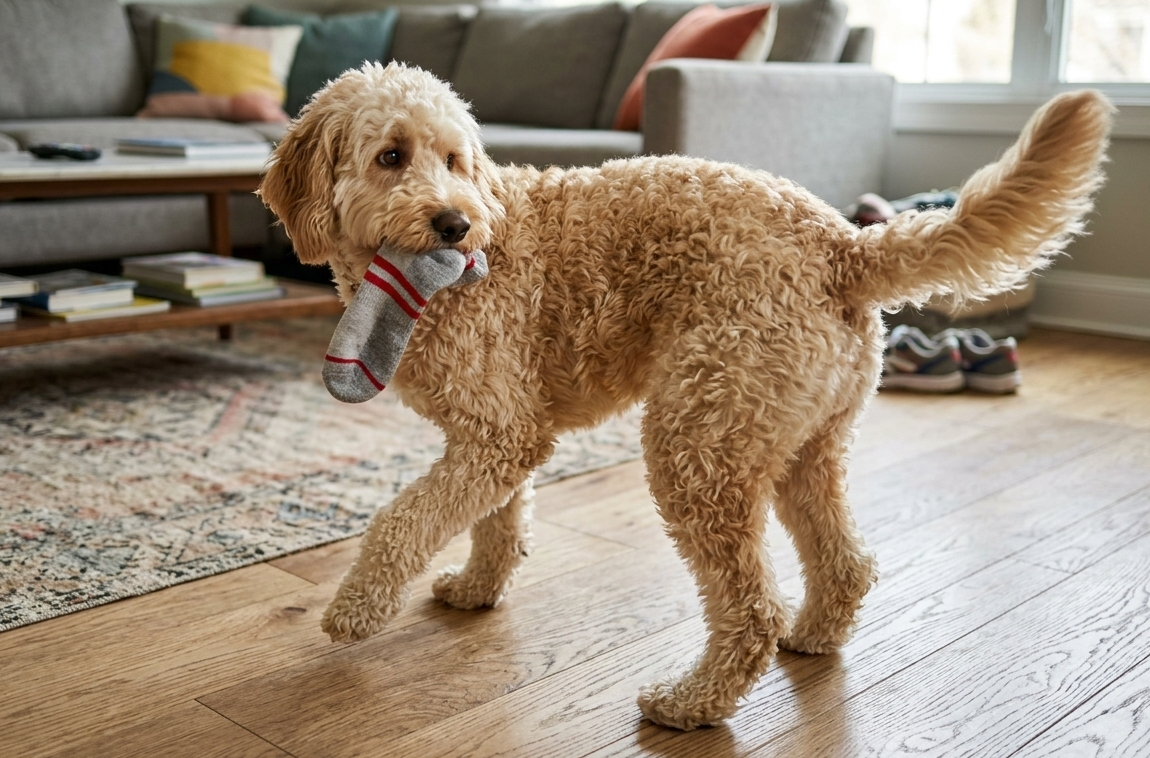
Does your dog stiffen when you walk by their food bowl? Do they growl when you try to reclaim a “stolen” sock? You aren’t alone. Resource guarding – the use of or threat of aggression to discourage others from taking a valued item – is one of the most common challenges dog parents face.
Rest assured that you are not alone! It’s actually not “dominance”; it’s a natural survival instinct that just doesn’t fit in a modern home. The good news? With the right protocol, you can change your dog’s emotional response from “Go away!” to “I love it when you approach!”
1. General Training Tips for Guarding
The best place to start? Classical Counter-Conditioning. The goal is to teach the dog that a human approaching their “stuff” is NOT a threat, and predicts something even better is about to happen.
- Stop the Practice: If your dog guards bones, stop giving bones for now. Management is your best friend while training is in progress.
- Never Punish the Growl: A growl is a communication tool. If you punish it, you may remove the warning system, leading to a dog that bites “out of nowhere.”
- The “Bonus” Rule: When you approach, you must offer something higher in value than what the dog already has (e.g., trade a piece of kibble for a bit of roast chicken).
- Work Below Threshold: If your dog is already growling, you are too close. Start at a distance where they are aware of you but remain relaxed.
Need Professional Eyes on Your Pup? Resource guarding can be a complex behavior to navigate safely. If you’re feeling overwhelmed or want a customized plan, book a Behavioural Triage call or a Private Lesson with our expert team.
2. Specific Examples of Training Exercises
The Food Bowl Protocol
- Step 1: Walk past your dog while they are eating from a distance of 6 feet and toss a high-value treat toward the bowl. Do not stop walking.
- Step 2: Gradually decrease the distance over several sessions until you can stand next to the bowl and drop the treat in.
- The Goal: Your dog should eventually look up with a wagging tail when you approach their bowl, expecting a “bonus.”
The “Trade” Game for Objects
- Step 1: Offer your dog a low-value toy (like a plain rubber ball).
- Step 2: Approach with a high-value treat (like a piece of cheese).
- Step 3: As the dog drops the ball to take the cheese, say “Thank you!”
- Crucial Step 4: Give the ball back immediately! This teaches the dog that “giving up” an item doesn’t mean losing it forever.
3. Troubleshooting Common Hurdles
Even the best training plans hit snags. Here are two common issues and how to fix them:
- The “Stay-Away” Stare: If your dog stops eating and stares at you intensely as you approach, you are moving too fast. Increase your distance and use higher-value treats until the dog’s body language remains soft and wiggly.
- The “Stolen” Item Emergency: If your dog grabs something dangerous (like grapes or a sharp object), don’t chase them! Chasing turns it into a game or a competition. Instead, “accidentally” drop a handful of high-value treats on the floor away from the item to lure them into a safe trade. Creating a trail or spray of treats is a way to ensure you have enough time to grab the item before they try to snatch it back in the early stages.
Why Managing Resource Guarding Matters
Addressing guarding early prevents the behavior from escalating and builds a foundation of trust between you and your dog. By following these protocols, you’re teaching your dog that your presence is always a win for them, and working on long term behaviour change.
Let’s Build Your Dog’s Confidence Together Ready to turn those growls into wags? Whether you need help with the basics or a deep dive into complex guarding, we’re here to help.
Explore our Private Lessons or schedule a Behavioural Triage call to get started on the right paw!