
How do you safely take a toy or bone away from a dog?
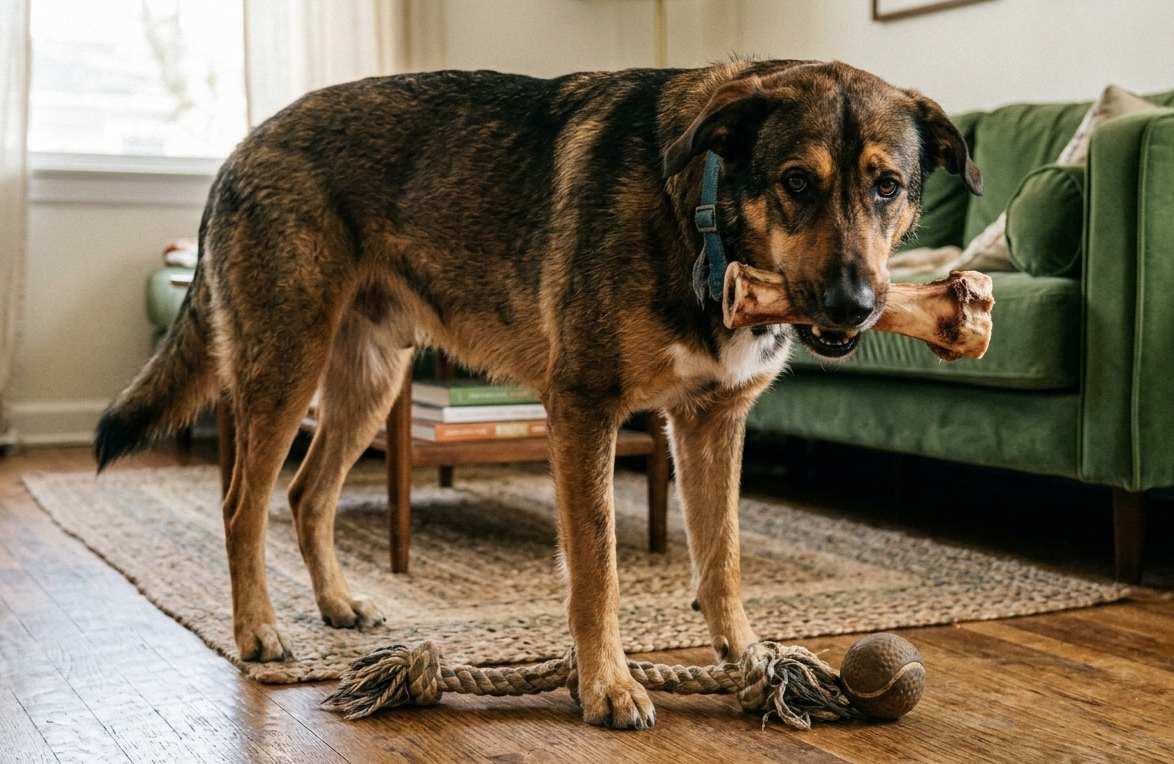
Does your dog exhibit aggressive behavior when he has a bone or toy? This issue is called Resource Guarding and if not addressed, can escalate into dangerous behaviors like biting.
From an evolutionary standpoint, dogs developed this behavior for obvious reasons. If a dog didn’t protect high value objects like meaty bones from theft, it would starve, pure and simple!
In practical terms, that toy, bone, or high valued object is rewarding to the dog, and having it taken away is an undesired outcome.
Forcing the dog physically to give up the toy will cause this problem to escalate, up to and including severe biting. So how can we address it safely?
As a positive reinforcement dog trainer, you must make the behavior of giving up the toy or bone a rewarding behavior. This is commonly done by trading objects with the dog with food – after all, the dog can’t guard a toy while simultaneously taking food from your hand.
Furthermore, if every time a toy or bone is given up and it’s put away, there’s no incentive for the dog to ever give up the toy, so its important to trade for food, and then return the toy to the dog. This creates a win-win situation where there’s no downside at all to giving up the highly valued object.
If you trade for food, and return the toy enough times, you’ll find your dog actually looks forward to releasing the toy as you approach. Its at this time we can put the behavior on cue with “Out” or “Drop It”.
If your dog has developed a serious case of resource guarding, where he starts growling and even biting as you approach, it is absolutely critical that you get professional help with this work as the risk of eliciting a dog bite is very high.
Whatever you do, don’t force the dog to release the object. This only teaches the dog that he was right to guard the item in the first place, and will increase the severity of the guarding and increase the severity of his aggression response. He’ll progress from guarding looks and body language to growling, and ultimately may resort to biting to protect the object.
Start early with your puppy to practice trading. If your adult dog is growling or biting, get help right away with a trainer or behaviourist that uses positive reinforcement to teach the dog that giving up toys is a fun and rewarding game.
Training Exercises for Resource Guarding
The Food Bowl Protocol
- Step 1: Walk past your dog while they are eating from a distance of 6 feet and toss a high-value treat toward the bowl. Do not stop walking.
- Step 2: Gradually decrease the distance over several sessions until you can stand next to the bowl and drop the treat in.
- The Goal: Your dog should eventually look up with a wagging tail when you approach their bowl, expecting a “bonus.”
The “Trade” Game for Resource Guarding of Objects
- Step 1: Offer your dog a low-value toy (like a plain rubber ball).
- Step 2: Approach with a high-value treat (like a piece of cheese).
- Step 3: As the dog drops the ball to take the cheese, say “Thank you!”
- Crucial Step 4: Give the ball back immediately! This teaches the dog that “giving up” an item doesn’t mean losing it forever.
Troubleshooting Common Hurdles
Even the best training plans hit snags. Here are two common issues and how to fix them:
- The “Stay-Away” Stare: If your dog stops eating and stares at you intensely as you approach, you are moving too fast. Increase your distance and use higher-value treats until the dog’s body language remains soft and wiggly.
- The “Stolen” Item Emergency: If your dog grabs something dangerous (like grapes or a sharp object), don’t chase them! Chasing turns it into a game or a competition. Instead, “accidentally” drop a handful of high-value treats on the floor away from the item to lure them into a safe trade. Creating a trail or spray of treats is a way to ensure you have enough time to grab the item before they try to snatch it back in the early stages.
Why Managing Resource Guarding Matters
Addressing guarding early prevents the behavior from escalating and builds a foundation of trust between you and your dog. By following these protocols, you’re teaching your dog that your presence is always a win for them, and working on long term behaviour change.
Let’s Build Your Dog’s Confidence Together Ready to turn those growls into wags? Whether you need help with the basics or a deep dive into complex guarding, we’re here to help.
Explore our Private Lessons or schedule a Behavioural Triage call to get started on the right paw!